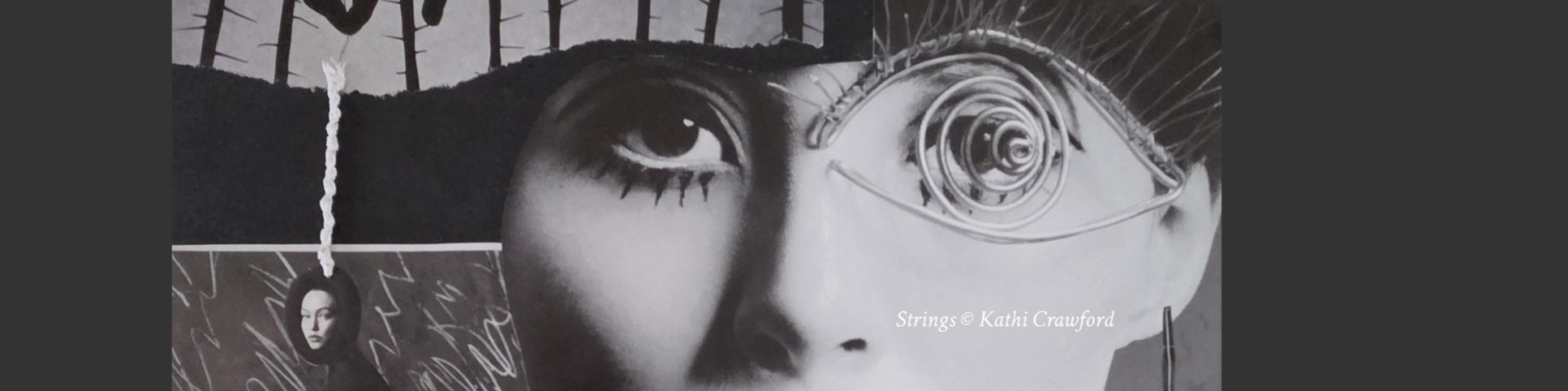
“She imagines the window/ is a portal to another world,/ that there is an outside (she writes) apart/ from in here, where pages pile up,/ fresh-inked, finger-smeared.”
The second poem, Clairvius Narcisse, invokes the story of a Haitian man who was declared dead and buried in 1962, but reappeared in 1980, claiming that he had been poisoned, unearthed and enslaved by a bokor, a voodoo practitioner. The poem doesn’t tell that story, but relates it to the personal experience of feeling divided between the reality of who we are and the person we could be.
“I think I am being haunted/ by the man I could be./ Late at night, he murmurs/ grand ambitions for the coming day./ He is my severed shadow/ freed of the soul-binding sinew/ his greatest pleasure/ taking the measure of me”
Ken doesn’t resolve this dispute, but acknowledges the uneasy relationship, and we are never completely sure which is the zombie and which the bokor. This ambiguity and the unreliability of the narrator are the engines of the poem. The result is eerie and effective.
Experience Ken’s moving work in Synkroniciti’s Dignity, Vol. 8, No. 3, available for $7 here: https://synkroniciti.com/the-magazine/purchase-individual-issues/.
 Colorado-born, Ken W. Farrell lives and writes in Texas, his work forthcoming or published in various anthologies and journals such as South Hall Literary Magazine, NonBinary Review, Horseshoe LiteraryMagazine, Pilgrimage, and Sport Literate. Ken holds an MFA (Texas State University) and an MA (Salisbury University), and he has been an adjunct, cage fighter, pizzaiolo, and warehouseman.
Recently, Ken has begun volunteering as an English conversation buddy for Ukrainian refugees, and he is learning to act with his adult son. And Ken is (still) working to meet his daughter’s challenge to finish his novel—or to simply stop adding more and more to his tale of an orphan navigating a speculatively surreal and otherly-natural world.